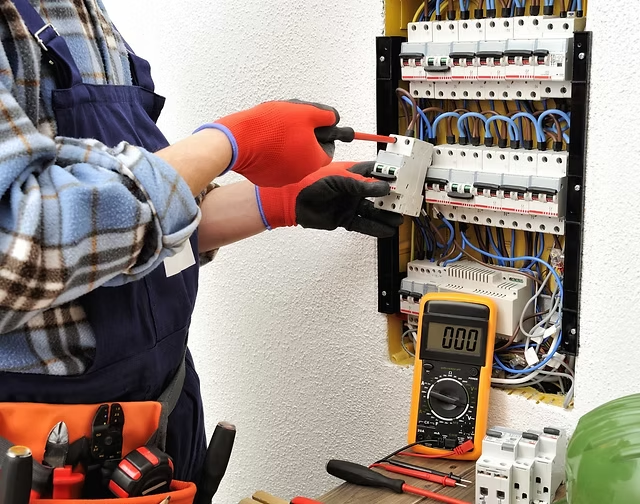


What Are Voltage Requirement Changes?
A voltage requirement change is any project where a facility must adjust the voltage level used by equipment, systems, or entire sections of the plant. These changes can involve:
-
Upgrading or reconfiguring electrical distribution
-
Adding transformers or replacing existing units
-
Modifying switchgear, feeders, conduits, and routing
-
Updating equipment to match the new voltage standard
-
Completing shutdown tie-ins and commissioning support
Voltage changes are common in industrial and power-related facilities because modern equipment often operates more efficiently at higher voltages, and expansions increase demand.
Common Reasons Facilities Change Voltage Requirements
1) Facility Expansion or New Production Lines
New equipment can require different voltage or higher capacity than your existing system can provide.
2) Equipment Modernization
Upgraded motors, drives, pumps, compressors, or process systems may require a different voltage standard than legacy equipment.
3) Improved Efficiency and Reduced Current
Higher voltage can reduce current for the same power level, helping minimize losses and improve system efficiency (depending on application and design).
4) Standardization Across the Site
Facilities sometimes standardize voltage (e.g., moving multiple areas to 480V) to simplify maintenance, reduce spare parts, and improve reliability.
5) Reliability and Safety Improvements
Aging infrastructure may struggle to support changing loads. Upgrading voltage requirements can pair well with modern protection and improved distribution layout.
What’s Typically Involved in Voltage Requirement Change Projects
1) Transformer Installation or Replacement
Transformers are often at the center of a voltage change stepping voltage up or down to match facility requirements.
Typical scope includes:
- New transformer pad or foundation support work
- Equipment setting and alignment support
- Tie-in readiness planning during shutdown windows
2) Switchgear and Distribution Modifications
Voltage changes may require new or modified distribution equipment to safely handle different voltage levels.
Common work includes:
- Electrical room or yard infrastructure modifications
- Equipment placement support and clearance requirements
- Coordination for cutover and commissioning phases
3) Cable, Conduit, and Feeder Updates
New voltage requirements often drive changes in routing, cable type, spacing, and support systems.
4) Equipment Compatibility Updates
Motors, control components, drives, and protective devices may need replacement or adjustment to match the new voltage level.
5) Outage Planning and Cutover Execution
Most voltage changeovers require controlled shutdowns to safely transition service.
Outage support typically involves:
- Tight scheduling and critical path coordination
- Safe work sequencing and controlled zones
- Efficient execution to minimize downtime
Risks of Poorly Executed Voltage Changes
Voltage requirement changes must be handled carefully. Mistakes or rushed execution can result in:
- Equipment damage due to incorrect voltage compatibility
- Extended downtime from cutover delays
- Safety hazards during tie-ins and transitions
- Failed inspections or commissioning setbacks
- Increased rework costs and schedule overruns
That’s why experienced planning, proper sequencing, and disciplined field execution are essential.
How Bunney’s Inc. Supports Voltage Requirement Change Projects
Bunney’s Inc. provides construction support services that help voltage requirement change projects stay safe, controlled, and schedule-driven especially in industrial environments where coordination and precision matter.
Our support capabilities include:
- Industrial construction services supporting electrical infrastructure modifications
- Heavy lifting and rigging support for transformers and major equipment
- Precision equipment positioning to ensure accurate placement and fit-up
- Outage support services for shutdown tie-ins and cutovers
- Safety-first field execution aligned with plant/utility standards
We work alongside your project team to help
Voltage Requirement Changes: Upgrade Facility Power Safely with Bunney’s Inc.
Voltage requirement changes happen when a facility expands, installs new equipment, or modernizes electrical systems often requiring upgrades to transformers, switchgear, distribution pathways, and equipment compatibility. Done correctly, voltage changes improve reliability, support higher loads, and reduce long-term operating risk. Done poorly, they can cause downtime, failed commissioning, and equipment damage.
At Bunney’s Inc., we support voltage requirement change projects with industrial construction services, outage support, heavy handling, and precision installation execution—helping your team complete upgrades safely and on schedule.
What Are Voltage Requirement Changes?
A voltage requirement change is a project that adjusts the voltage level supplied to equipment, systems, or entire plant areas. Examples include:
- Converting systems (e.g., 208V → 480V, or low-voltage → medium-voltage distribution)
- Adding or replacing transformers for new voltage steps
- Modifying distribution to support new loads and protection requirements
- Updating equipment to match the new voltage standard
- Executing shutdown tie-ins and cutovers with minimal downtime
Why Facilities Change Voltage Requirements
Facility expansion and new loads
New production lines, new motors, or added process systems can push demand beyond current voltage or capacity limits.
Equipment modernization
Newer equipment may be optimized for different voltage standards and require updated power delivery.
Improved efficiency and reduced current
In many applications, higher voltage reduces current for the same power level helping reduce losses and easing strain on some components (depending on design).
Standardization across the site
Standardizing voltage can simplify maintenance, reduce spare parts complexity, and improve long-term supportability.
Reliability and safety improvements
Aging electrical infrastructure may become increasingly failure-prone. Voltage upgrades often align with broader modernization efforts.
What’s Typically Included in Voltage Change Projects
1) Transformer installation or replacement
Transformers are often the center of voltage conversions.
Common scope support includes:
- Foundation/pad and mounting prep
- Transformer setting and placement support
- Clearances, fit-up, and tie-in readiness planning
2) Switchgear and distribution modifications
Voltage changes may require new switchgear, protective devices, or distribution reconfiguration.
Typical work involves:
- Infrastructure adjustments for new gear layouts
- Safe equipment placement and access improvements
- Coordination for cutover and commissioning readiness
3) Conduit, feeder, and routing updates
New voltage and load requirements may require changes in:
- Pathways and supports
- Cable routing and termination readiness
- Coordination with structural/civil constraints
4) Equipment compatibility upgrades
Motors, drives, control systems, and protective devices may need updates to match the new voltage level.
5) Outage planning and cutover execution
Many voltage transitions require planned shutdown windows for safe cutover.
Key outage needs include:
- Tight sequencing and critical-path coordination
- Controlled work zones and safety compliance
- Efficient execution to minimize downtime
Risks to Control During Voltage Requirement Changes
Voltage changeovers are high-stakes. Common risks include:
- Equipment damage from incorrect compatibility or installation issues
- Extended downtime due to cutover delays or rework
- Safety hazards during transitions and tie-ins
- Failed inspections/commissioning from incomplete turnover readiness
- Cost overruns from poor planning and scheduling gaps
A disciplined plan and experienced field execution are essential to reduce these risks.
How Bunney’s Inc. Supports Voltage Requirement Change Projects
Bunney’s Inc. provides construction support that helps voltage requirement changes stay safe, controlled, and schedule-driven, especially in industrial environments where downtime is expensive.
Our support capabilities include:
- Industrial construction services supporting electrical infrastructure upgrades
- Heavy lifting and rigging support for transformers and major components
- Precision equipment positioning for accurate placement and fit-up
- Outage support services for shutdown tie-ins and cutovers
- Safety-first execution aligned with plant and utility standards
Best Practices for a Smooth Voltage Changeover
Projects run best when teams prioritize:
- Clear scope and load planning (what changes, where, and why)
- Early outage scheduling for critical tie-ins
- Logistics planning for heavy equipment handling and site access
- Precision placement and verification to prevent startup issues
- Turnover readiness documentation and site coordination
Conclusion: Plan Voltage Requirement Changes with Confidence Contact Bunney’s Inc.
Voltage requirement changes are a smart step toward higher capacity, better reliability, and long-term facility performance but they require careful execution to avoid downtime and safety risk. Bunney’s Inc. is ready to support your voltage conversion or power upgrade project with disciplined field crews, safe handling, and schedule-focused construction support.
If you’re planning voltage requirement changes at your facility, contact Bunney’s Inc. today to discuss your scope, timeline, and how we can help deliver a safe and efficient upgrade.
Related Services: